Guides
In-depth articles connected to UAV Meteo's actual features — not generic filler.
23 guides

What Wind Speed Is Safe for Flying a Drone?
Sustained wind, gusts, your drone's manufacturer limit, and UAV Meteo's generic threshold are four different numbers — here's how they relate and which one actually matters for your flight.

Wind Speed vs Gusts: What Drone Pilots Need to Know
Average wind and gusts are rated separately on UAV Meteo for a reason — gusts are usually the more dangerous number for a small drone, and here's the mechanics of why.
Why Wind Can Be Stronger at 120m Than at Ground Level
The wind reading on the ground can be misleading once you climb — UAV Meteo's 10m/80m/120m/180m wind-by-altitude panel exists specifically because of this effect. Here's the meteorology behind it.

How to Read a Weather Forecast Before Flying a Drone
Wind, gusts, precipitation, visibility, temperature, daylight, and the Kp index — a walkthrough of every number that actually matters before a flight, and where to find each one.
What "Level 5 Wind Resistance" Means for Drones
Manufacturer wind ratings are measured in steady wind with a full battery. What a Level 5 or Level 6 rating means in m/s and km/h, what the test leaves out, and how to turn the spec into a wind limit you can actually fly by.

Can You Fly a Drone in the Rain? IP Ratings Explained
Most consumer drones have no water-resistance rating at all. What IP ratings really certify, which drones are built for rain, why condensation catches pilots out, and how to read a rain forecast before you fly.
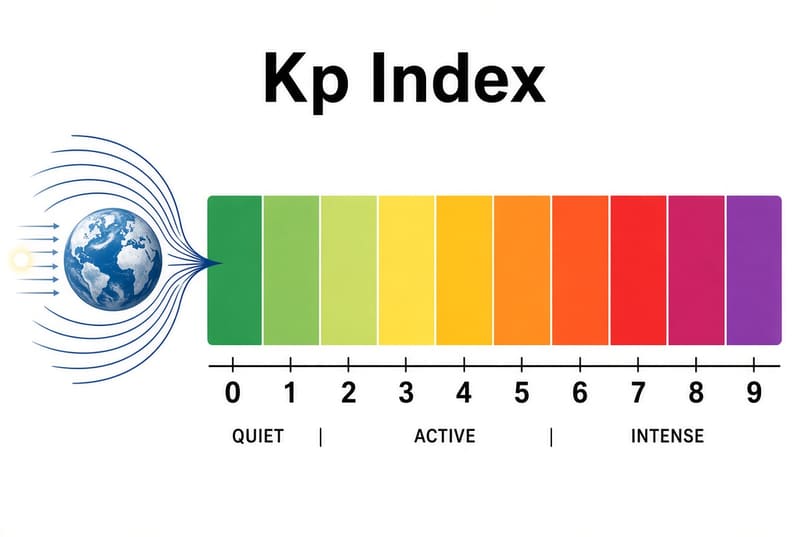
What Does the Kp Index Mean for Drone Pilots?
Kp measures global geomagnetic activity, not the weather at your field. How geomagnetic storms actually affect drone GPS and compasses, what each Kp level means in practice, and how UAV Meteo rates it.
Wind Shear and Drones: Sudden Changes With Height
Wind shear is a sudden change in wind speed or direction over a short distance. What UAV Meteo's Wind Shear card measures, the calm-morning trap, turbulence behind buildings and ridges, and how to fly safely through a shear layer.