DJI Mavic 3 Enterprise Wind Resistance & Weather Limits
The DJI Mavic 3 Enterprise has a manufacturer-rated max wind speed of 12 m/s (43.2 km/h, 26.8 mph, Beaufort 6). That is its wind limit, so it can fly in wind up to that speed. For a safe margin, plan on sustained wind below about 30 km/h and keep gusts under the rating.
Aerodynamic performance, wind tolerance, and cold weather operating limits for the DJI Mavic 3 Enterprise by DJI.
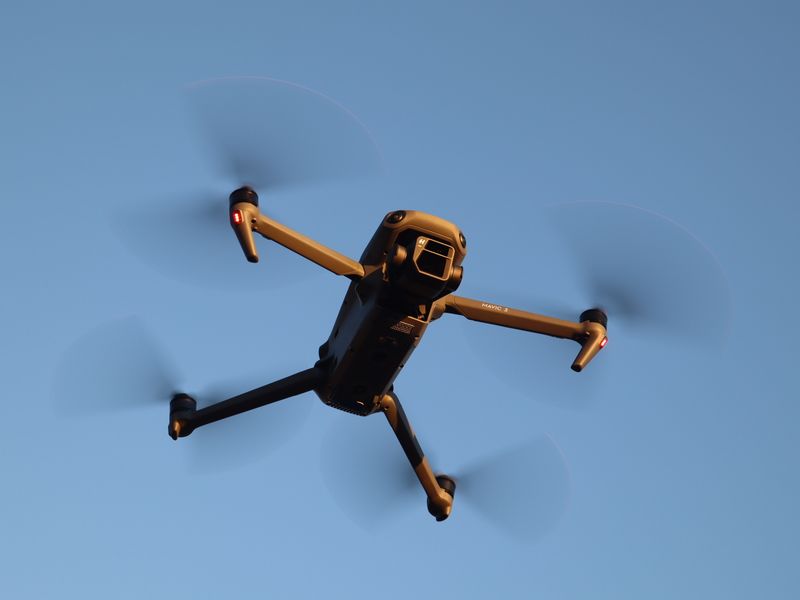 Illustrative photo; it may not show the DJI Mavic 3 Enterprise. Photo: Pexels
The DJI Mavic 3 Enterprise (3E/3T) features 12.0 m/s (43.2 km/h / 26.8 mph / Level 6 Beaufort) wind resistance, mechanical shutter surveying at high speeds, and an operating range of -10°C to 40°C (14°F to 104°F). It is not IP-rated.
Flyable Now (Within Limits)
New York (40.71°, -74.01°)
Technical Weather & Flight Limits Matrix
DJI Mavic 3 Enterprise Aerodynamics & Wind Handling
Engineered for commercial mapping, surveying, and thermal inspection, the Mavic 3 Enterprise series (M3E / M3T) supports an RTK module and mechanical shutter. With Level 6 wind resistance and 45 minutes flight time, it conducts precise aerial photogrammetry even in breezy field conditions.
Cold Weather & Battery Chemical Behavior
Enterprise operations in winter should utilize the 100W battery charging hub to warm batteries prior to mission execution. The DJI Pilot 2 app provides real-time battery cell telemetry.
High Wind & Vertical Wind Shear Guidelines
When mapping in winds above 8 m/s, adjust survey flight line direction perpendicular or parallel to the wind to minimize crab angle and maintain consistent ground sample distance (GSD).
Frequently Asked Questions About DJI Mavic 3 Enterprise
Answers based on DJI’s published specifications and UAV Meteo’s weather limits.
Drones similar to the DJI Mavic 3 Enterprise
Weather Tools for DJI Mavic 3 Enterprise Pilots
Specifications are taken from DJI’s published product information for the DJI Mavic 3 Enterprise. Real-world performance also depends on terrain, turbulence, battery condition and piloting. Always follow your local aviation rules.