DJI Mavic 3 Enterprise Windwiderstand & Wetterlimits
Die DJI Mavic 3 Enterprise hat laut Hersteller eine maximale Windgeschwindigkeit von 12 m/s (43,2 km/h, 26,8 mph, Beaufort 6). Das ist ihr Windlimit, sie kann also bis zu dieser Windgeschwindigkeit fliegen. Planen Sie für eine sichere Reserve mit anhaltendem Wind unter etwa 30 km/h und halten Sie Böen unter dem Nennwert.
Aerodynamische Leistung, Windtoleranz und Kaltwetter-Einsatzgrenzen für die DJI Mavic 3 Enterprise von DJI.
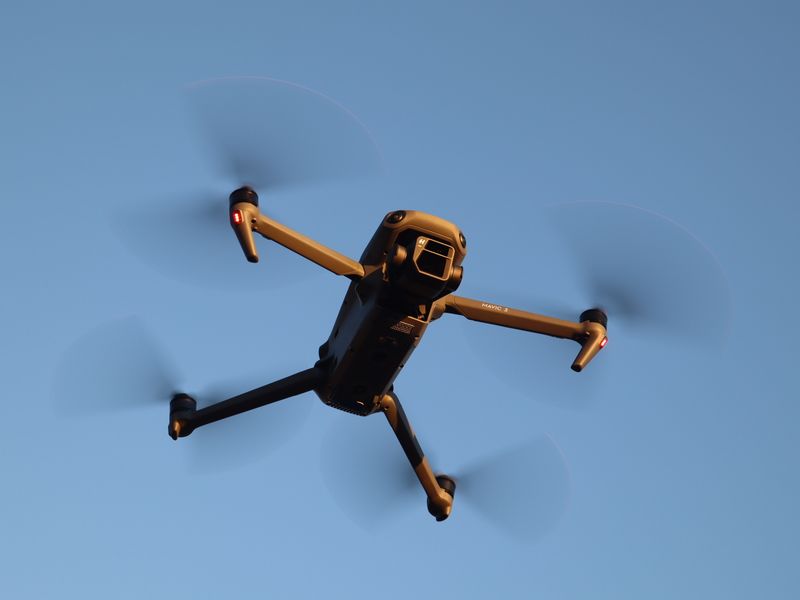 Symbolfoto; zeigt möglicherweise nicht die DJI Mavic 3 Enterprise. Photo: Pexels
Die DJI Mavic 3 Enterprise (3E/3T) hält Wind bis 12,0 m/s aus (43,2 km/h / 26,8 mph / Beaufort 6), vermisst mit mechanischem Verschluss auch bei hoher Fluggeschwindigkeit und arbeitet bei -10 °C bis 40 °C (14 °F bis 104 °F). Sie hat keine IP-Schutzklasse.
Jetzt fliegbar (Innerhalb der Grenzen)
New York (40.71°, -74.01°)
Technische Wetter- & Fluggrenzen-Matrix
DJI Mavic 3 Enterprise Aerodynamik & Windverhalten
Die Mavic-3-Enterprise-Serie (M3E / M3T) ist für gewerbliche Kartierung, Vermessung und Wärmebildinspektion gebaut und unterstützt ein RTK-Modul sowie einen mechanischen Verschluss. Mit Windstufe 6 und 45 Minuten Flugzeit liefert sie auch bei böigem Wind im Gelände präzise Luftbilder für die Photogrammetrie.
Kaltwetter & Akku-Chemie-Verhalten
Bei Einsätzen im Winter sollten Sie die Akkus vor dem Einsatz mit der 100-W-Ladestation aufwärmen. Die App DJI Pilot 2 zeigt die Zelldaten des Akkus in Echtzeit an.
Starkwind & Vertikale Windscherungs-Richtlinien
Bei Kartierflügen mit Wind über 8 m/s legen Sie die Flugbahnen der Vermessung quer oder parallel zur Windrichtung, damit der Vorhaltewinkel klein bleibt und die Bodenauflösung (GSD) gleichmäßig ist.
Häufig gestellte Fragen zur DJI Mavic 3 Enterprise
Antworten auf Grundlage der veröffentlichten Angaben von DJI und der Wettergrenzen von UAV Meteo.
Ähnliche Drohnen wie die DJI Mavic 3 Enterprise
Wetterwerkzeuge für DJI Mavic 3 Enterprise-Piloten
Die Angaben stammen aus den veröffentlichten Produktinformationen von DJI zur DJI Mavic 3 Enterprise. Wie sich die Drohne tatsächlich verhält, hängt auch von Gelände, Turbulenzen, Akkuzustand und Flugstil ab. Halten Sie sich immer an die örtlichen Luftfahrtvorschriften.