DJI Mavic 3 Enterprise : Résistance au Vent & Limites Météo
Le DJI Mavic 3 Enterprise est donné par le constructeur pour une vitesse de vent maximale de 12 m/s (43,2 km/h, 26,8 mph, Beaufort 6). C'est sa limite de vent : il peut donc voler jusqu'à cette vitesse. Pour garder une marge de sécurité, prévoyez un vent soutenu inférieur à environ 30 km/h et des rafales toujours sous la valeur indiquée.
Performances aérodynamiques, tolérance au vent et limites par temps froid pour le DJI Mavic 3 Enterprise de DJI.
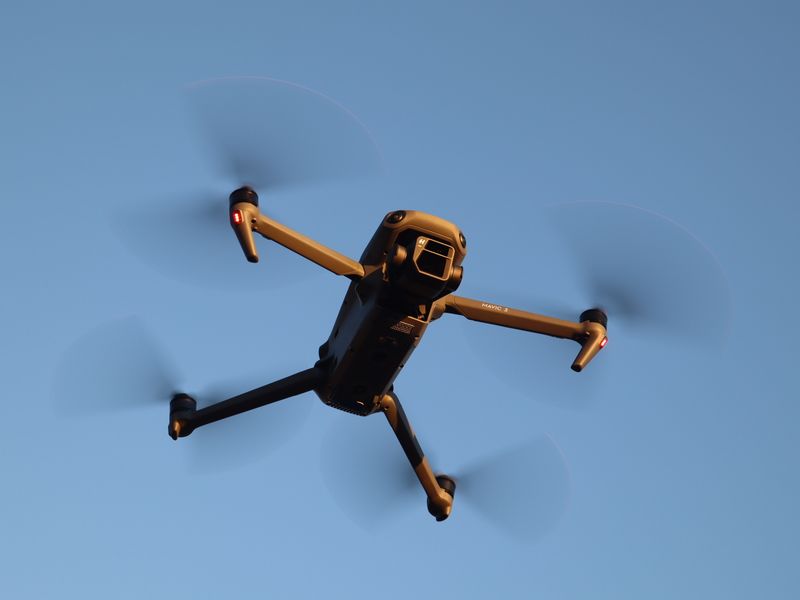 Photo d’illustration ; elle ne montre pas forcément le DJI Mavic 3 Enterprise. Photo: Pexels
Le DJI Mavic 3 Enterprise (3E/3T) résiste à un vent de 12,0 m/s (43,2 km/h / 26,8 mph / Beaufort 6), permet de réaliser des relevés à grande vitesse grâce à son obturateur mécanique et fonctionne de -10 °C à 40 °C (14 °F à 104 °F). Il n'a pas d'indice de protection IP.
Vol Possible (Dans les Limites)
New York (40.71°, -74.01°)
Matrice Technique des Limites de Vol
Aérodynamique & Comportement au Vent du DJI Mavic 3 Enterprise
Conçue pour la cartographie professionnelle, les relevés topographiques et l'inspection thermique, la série Mavic 3 Enterprise (M3E / M3T) prend en charge un module RTK et un obturateur mécanique. Avec une résistance au vent de niveau 6 et 45 minutes d'autonomie, elle réalise une photogrammétrie aérienne précise même sur le terrain par vent soutenu.
Vol Hivernal & Comportement Chimique de la Batterie
Pour les opérations professionnelles en hiver, utilisez le hub de charge de 100 W pour réchauffer les batteries avant la mission. L'application DJI Pilot 2 fournit la télémétrie des éléments de la batterie en temps réel.
Vents Forts & Cisaillement Vertical du Vent
Pour cartographier par vent supérieur à 8 m/s, orientez les lignes de vol du relevé perpendiculairement ou parallèlement au vent afin de réduire l'angle de dérive et de garder une résolution au sol (GSD) régulière.
Foire Aux Questions sur le DJI Mavic 3 Enterprise
Réponses fondées sur les caractéristiques publiées par DJI et sur les limites météo d’UAV Meteo.
Drones comparables au DJI Mavic 3 Enterprise
Outils Météo pour Pilotes de DJI Mavic 3 Enterprise
Les caractéristiques proviennent des informations produit publiées par DJI pour le DJI Mavic 3 Enterprise. Le comportement réel dépend aussi du relief, des turbulences, de l’état de la batterie et du pilotage. Respectez toujours la réglementation aérienne locale.